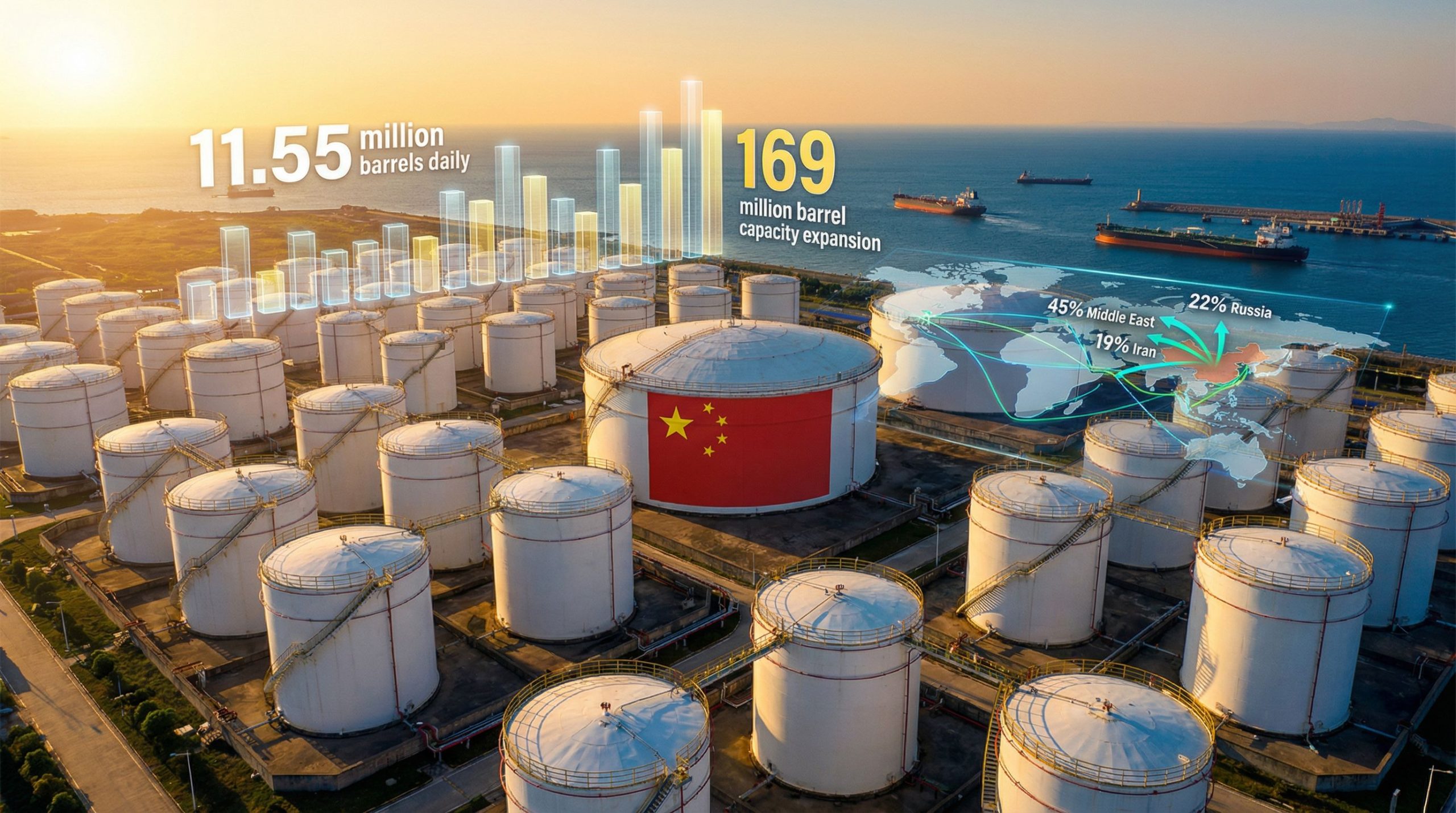
China’s shifting oil import patterns are reshaping the global tanker market, as 2025 sees significant changes in crude sourcing. China’s total crude oil imports rose by 4.9% year-on-year (YoY) in 2025, reaching 11.6 million barrels per day (mbpd), signaling a robust demand for oil despite volatile global markets. This shift in trade flows is heavily influencing the seaborne oil market, driving tanker volumes and global shipping routes to adapt. As China continues to stockpile crude oil, the growth in seaborne volumes is capped at 3.2% YoY, limiting the anticipated expansion of tanker tonne miles.
Key Shifts in China’s Oil Import Strategy
The impact of China oil growth extends beyond simple volume increases. The country’s import strategy has led to notable shifts in where and how it sources its crude oil. Imports from the US experienced a sharp decline of 61% YoY in 2025, a direct consequence of increased tariffs and ongoing trade tensions. In stark contrast, imports from Canada skyrocketed by 313%, largely due to the expansion of the Transmountain Pipeline and growing efforts to enhance trade relations between China and Canada. These changes in import sourcing have altered global tanker routes, shortening sailing distances by nearly 1%, significantly impacting the tonne miles metric.
The Fourth Quarter Surge in Oil Imports
The seaborne import growth from China was less than expected, with overall volumes increasing less than 1% YoY in the first half of 2025. However, the fourth quarter saw a significant rebound, with 56% of total import growth happening in the final quarter, largely driven by a market surplus and falling Brent crude prices. This increase in imports during the latter half of the year underscores the strategic nature of China oil growth, aimed at securing future energy needs at favorable prices.
Impact of Canadian and Brazilian Exports
Despite the decline in US and Russian imports, other countries like Brazil and Canada have been key players in meeting China’s rising demand for crude. Exports from Brazil, along with Canadian imports, have emerged as the primary drivers of growth in China’s oil sector. Meanwhile, Russian exports to China accounted for 11% of the country’s seaborne supply, showing resilience despite external pressures and sanctions.
Conclusion: The Global Impact of China Oil Growth
As China focuses on enhancing its stockpiles, the crude tanker market remains highly sensitive to shifts in its import dynamics. This not only affects global trade routes but also highlights the significant influence of China oil growth on international shipping and tanker markets. The ongoing developments underscore the volatility of global trade and the challenges faced by the shipping industry as it adapts to changing demand patterns.