NEW DELHI: The controversy surrounding Jamia Millia Islamia Registrar Prof. Md. Mahtab Alam Rizvi has developed into a larger institutional and constitutional debate in India: when serious allegations are publicly raised against a senior official of a publicly funded university, should the primary response be to restrict reporting or to independently investigate the allegations and establish the facts?
The distinction is critical. Prof. Rizvi is entitled to the presumption of innocence. Allegations against him are not proof of wrongdoing. A criminal complaint is not an FIR, an FIR is not a charge sheet and a charge sheet is not a conviction. No responsible court, university or media organisation should treat allegations as established facts without evidence and due process.
But the opposite principle is equally important: the fact that allegations have not been proven does not mean that they should never be investigated, particularly when they concern the appointment and career progression of a senior official in a public institution.
Published reports have raised questions about Prof. Rizvi’s academic qualifications, professional experience and the processes surrounding his appointment and subsequent career progression. OpIndia reported that a criminal complaint sought registration of an FIR and investigation into allegations concerning his academic appointments, including questions over eligibility and claimed professional experience. The New Indian Express also reported on the complaint and questions raised concerning his qualifications and career progression.
Those reports do not establish guilt. But their existence raises a legitimate institutional question: if serious allegations have been formally made and publicly reported, should the response not be an independent and transparent examination of the allegations themselves?
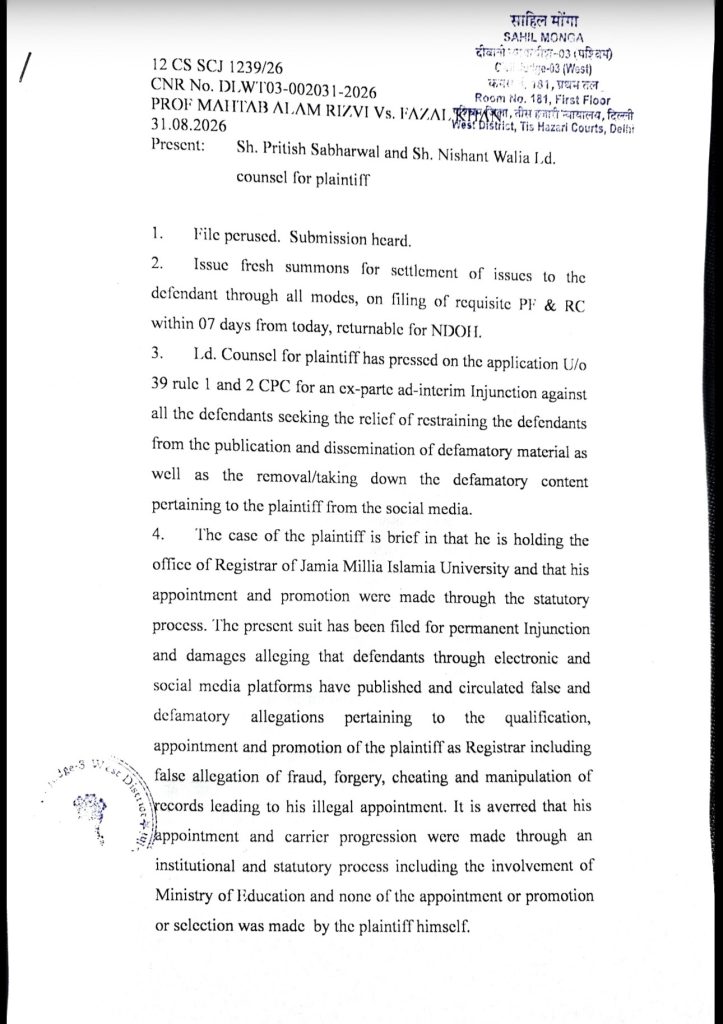
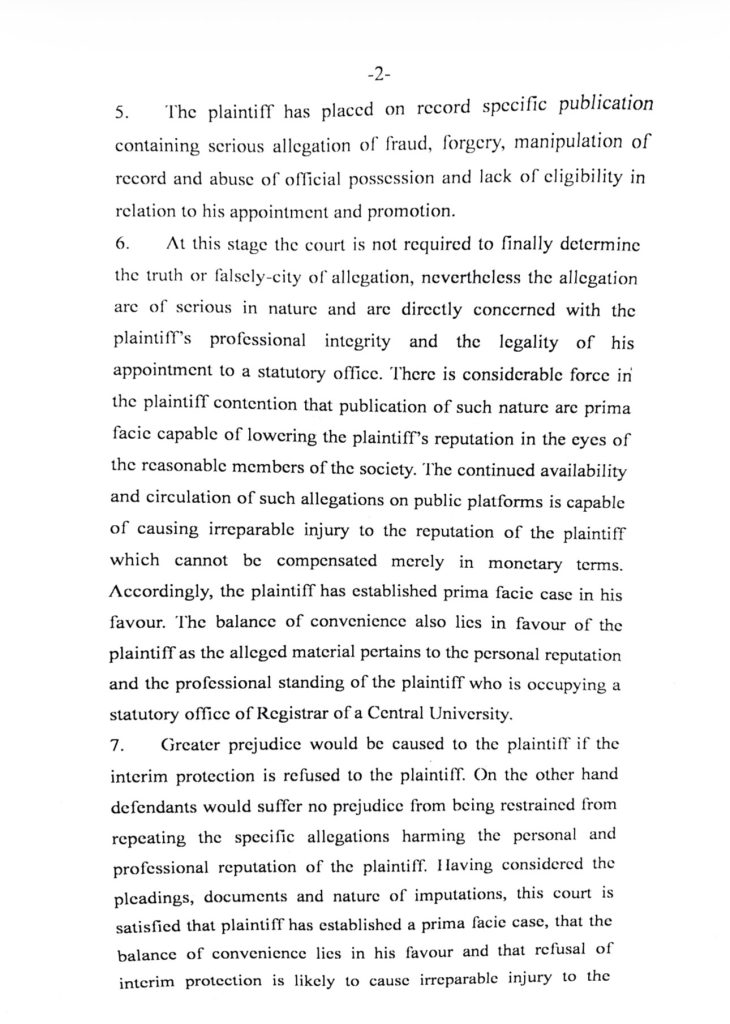
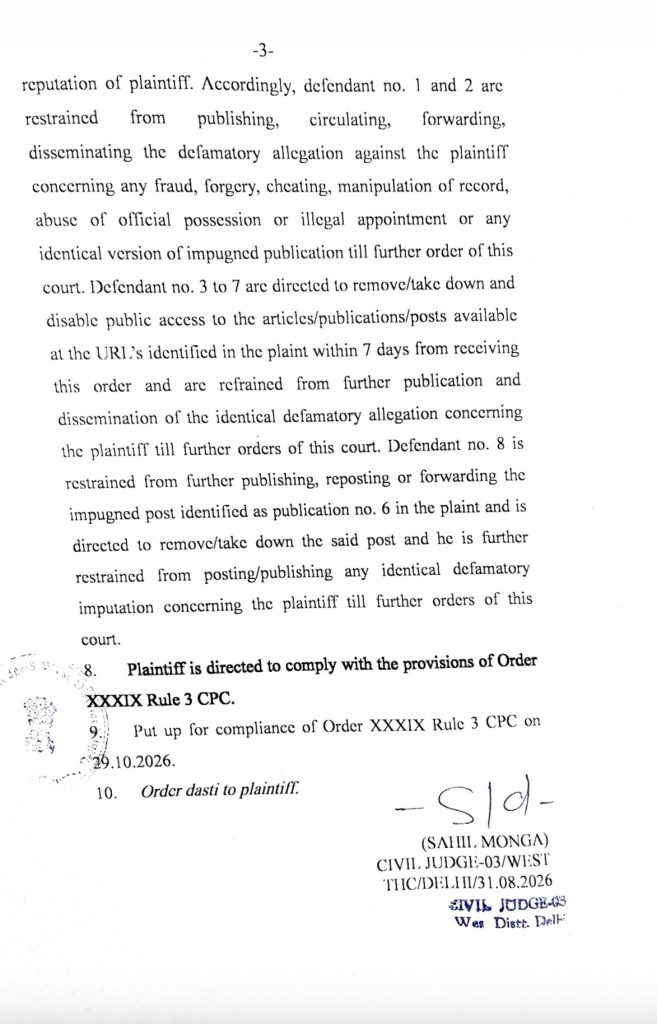
That question has become particularly significant following an interim court restraint concerning the publication or circulation of specified allegations about Prof. Rizvi. The precise legal merits of any court order must ultimately be assessed within the judicial process. Courts have the authority and responsibility to protect individuals against unlawful defamation and demonstrably false allegations. Prof. Rizvi, like every citizen, is entitled to seek legal protection.
However, the wider public-interest concern remains. If allegations about a senior official’s appointment have not yet been finally established as true or false, should the first priority be to remove reporting or to determine the truth through an independent investigation?
The answer should matter profoundly for a public university. If the allegations are false, a credible independent inquiry could clear Prof. Rizvi and strengthen his position. It could establish that his qualifications were properly assessed, that his professional experience met applicable requirements and that every stage of his academic progression complied with the relevant rules.
If any irregularity is found, accountability could follow.
Either outcome would produce something far more valuable than silence: a verified answer.
This is why the controversy cannot be reduced to a simple conflict between media freedom and personal reputation. The more fundamental issue concerns institutional accountability. Questions reportedly raised about Prof. Rizvi’s professional record also concern the university bodies and authorities that assessed and approved his appointments. If eligibility or experience has been questioned, the institutional inquiry should logically extend beyond the individual.
Who verified the qualifications? Which committees assessed the claimed experience? What documents were considered? What eligibility criteria were applied? Were the procedures followed consistently? And if allegations concern multiple stages of an academic career, were those stages independently examined before subsequent appointments were approved?
These are not accusations. They are the questions that an impartial inquiry is designed to answer.
The controversy is particularly sensitive because Prof. Rizvi occupies the office of Registrar at a major Central University. Jamia Millia Islamia is part of India’s public higher-education system, and its senior officials exercise significant institutional authority. Public institutions cannot reasonably demand that citizens apply one standard of scrutiny to students and another to those who govern the institution.
Universities impose strict requirements on students and job applicants. Certificates are verified. Eligibility criteria are enforced. Applications can be rejected over missing documentation or failure to meet prescribed conditions. When serious questions are raised about a senior official, therefore, the appropriate standard should not be lower.
The higher the office, the higher the obligation to demonstrate institutional integrity.
The controversy has gained additional significance because Jamia has recently faced other disputes concerning transparency. Students protested alleged irregularities in the university’s spot-admission process and demanded greater clarity about waiting lists and admissions. The university rejected allegations of wrongdoing, while disciplinary action was taken against several students involved in the protests.
Again, allegations of admission irregularities do not establish that the process was unfair. But transparency provides the strongest institutional answer. If a system is fair, the relevant records can demonstrate it. Publishing procedures, explaining waiting-list movement and clarifying decisions is generally more effective in restoring public trust than simply insisting that allegations are unfounded.
The same principle applies to questions concerning academic appointments.
Another controversy has involved the appointment of Dr. Masud Alam as an Assistant Professor in Jamia’s Arabic Department. The New Indian Express reported scrutiny surrounding the appointment amid allegations about possible personal links with the Vice-Chancellor and claims concerning Alam’s past. The newspaper explicitly noted that some of those claims could not be independently verified and that the status and outcome of an alleged criminal case could not immediately be confirmed.
That qualification is essential.
Allegations must not become verdicts. But nor should institutions demand silence simply because allegations have not yet become verdicts.
The appropriate response is verification. If questions are raised about a public appointment, an institution should be able to explain the recruitment criteria, eligibility assessment and legally permissible details of the selection process. Transparent procedures protect candidates as much as institutions.
Jamia is also facing separate judicial scrutiny over allegations concerning outsourced non-teaching recruitment. The Delhi High Court has issued notice to the university over a plea alleging religious discrimination in the hiring of outsourced workers, according to media reports. A judicial notice does not establish that discrimination occurred, and the allegations remain subject to legal examination.
Yet the accumulation of disputes has created a broader credibility challenge.
Each controversy must be treated independently. The allegations concerning Prof. Rizvi are separate from those surrounding admissions, faculty recruitment and outsourced employment. None should be merged into a collective finding of wrongdoing against Jamia.
But repeated disputes involving institutional processes inevitably raise a wider question: why are serious questions repeatedly reaching journalists, student protests and courts instead of being addressed through proactive and independent systems of institutional accountability? The current controversy has also placed the judiciary under scrutiny not because courts should be denied the authority to protect reputation, but because the consequences of restricting public-interest reporting can extend far beyond an individual dispute.
An interim restraint may be temporary in law, but its effect on journalism can be immediate. A report removed from public view may lose relevance long before litigation reaches a final conclusion. Smaller news organisations may lack the resources to sustain prolonged legal battles. Other journalists may observe the consequences and avoid investigating powerful institutions.
This is the broader danger of a chilling effect.
A democracy does not lose freedom of speech only when journalists are imprisoned. It can also lose it gradually when the legal cost of asking questions becomes too high. That is why courts dealing with allegations involving public officials and public institutions face an exceptionally difficult constitutional responsibility. They must protect citizens from malicious falsehoods. But they must also ensure that legal remedies do not unintentionally become substitutes for investigating serious allegations. A court order removing disputed reporting can protect a reputation in the immediate term. An independent investigation can resolve the underlying question.
Those are not the same thing.
If a complaint contains allegations concerning qualifications, eligibility, professional experience or public appointments, the public interest is not necessarily served by making the reporting disappear while leaving the allegations unresolved. The stronger institutional response is to investigate the claims, examine the documents and publish the legally permissible findings.
Such an approach would protect all sides.
If Prof. Rizvi is cleared, the investigation could establish his eligibility and professional record through an independent process rather than leaving suspicion to circulate indefinitely. If the allegations are found to have merit, the relevant authorities could take action according to law. If reporting contains inaccuracies, verified findings could correct the public record. Silencing debate, by contrast, does not resolve the factual dispute. It merely postpones it.
The central question for Jamia and the relevant authorities is therefore straightforward: why should a public controversy involving serious allegations against a senior university official end with less information available to the public rather than more?
And the question for the judiciary is equally significant: when the truth of allegations has not yet been finally determined, should the legal system focus only on restraining speech or should it also ensure that serious allegations concerning a public office are examined through a credible and independent process? Courts are not investigative agencies, and a court cannot simply presume allegations to be true. But where serious, specific allegations have been formally raised, judicial and institutional mechanisms can require the appropriate competent authorities to examine them in accordance with law. That may ultimately be the most important distinction in the Jamia controversy.
The answer to an allegation is not a presumption of guilt. But neither should the answer simply be silence. The answer should be the truth and truth requires investigation.
– James Franklin with Sherin