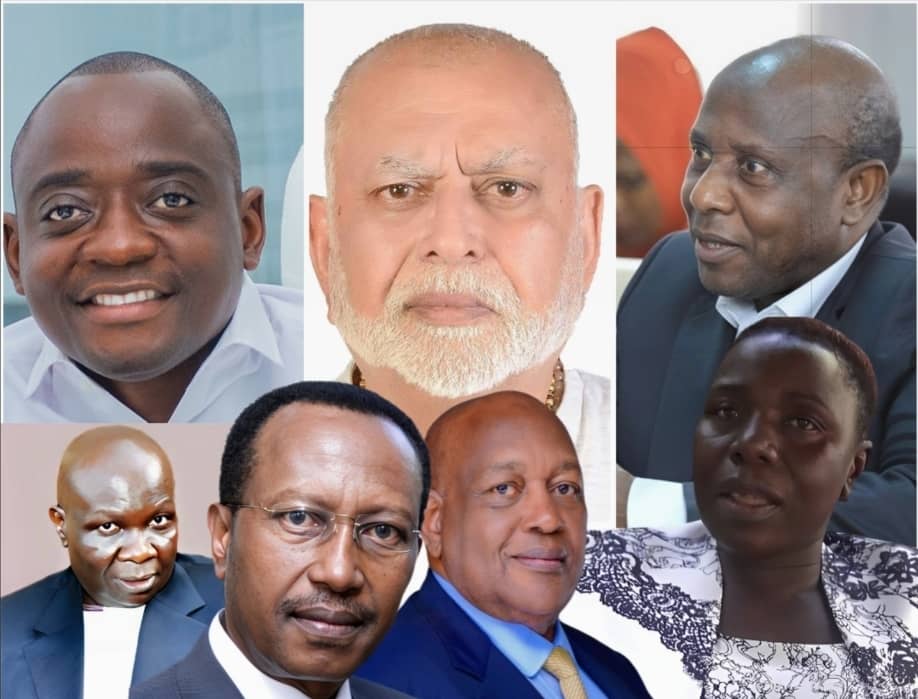
Uganda’s Richest Men built their fortunes far from the glare of stock tickers and quarterly earnings calls. In a market where public equity remains thin and disclosure limited, wealth has accumulated through land control, fuel distribution, telecom exposure and industrial reinvestment.
Uganda’s economy, valued at roughly $65 billion, continues to expand through construction, services and oil-linked infrastructure. Yet the capital markets remain shallow. According to the World Bank, domestic financial systems in frontier economies often lack depth, reinforcing reliance on private enterprise and tangible assets. In Uganda’s case, this has created a structurally influential class of asset holders whose combined estimated wealth approaches $10 billion.
Below is a ranking of Uganda’s Richest Men, based on asset-backed estimates and sector exposure. Figures are indicative, not audited declarations.
1. Hamis Kiggundu – Approx. $1.35 Billion
Kiggundu’s wealth rests on high-density commercial developments across Kampala. Towers, shopping complexes and land banking strategies anchor his valuation.
His model reflects disciplined reinvestment. Rental income flows back into new construction cycles. Industrial diversification and fintech participation suggest an attempt to move beyond pure property dependence.
2. Sudhir Ruparelia – Approx. $1.2 Billion
Ruparelia’s portfolio resembles a diversified conglomerate. Hospitality estates, commercial property, education institutions and insurance operations layer asset-backed stability with operational turnover.
Tourism-sensitive hotels generate high margins during stable cycles, while commercial buildings provide long-term capital anchoring.
3. John Bosco Muwonge – Approx. $850 Million+
Muwonge represents the archetype of the CBD landlord. His wealth is tied to prime trading corridors in Kampala, where tenant density and foot traffic underpin rental durability.
Scarcity of central land remains his primary valuation driver.
4. Drake Lubega – Approx. $800 Million+
Lubega built scale through aggressive acquisition of arcades and mixed-use properties. His capital structure is rent-intensive, reinforced by industrial and education holdings.
Occupancy levels and retail turnover directly influence portfolio performance.
5. Mansour Matovu – Approx. $785 Million
Matovu transitioned from logistics and trade into property consolidation. Multi-storey arcades across Kampala’s trading hubs now form the backbone of his fortune.
Land positioning and tenant density drive his recurring income model.
6. Karim Hirji – Approx. $785 Million+
Hirji’s capital blends hospitality, commercial property and automotive distribution. Hotel assets and landmark towers anchor valuation, while operational businesses introduce liquidity.
His exposure remains linked to tourism performance and exchange rate stability.
7. Tom Kitandwe – Approx. $700 Million+
Kitandwe’s wealth evolved from trading roots into large-scale property accumulation. Land holdings and agribusiness add diversification beyond urban commercial rents.
Strategic positioning in high-footfall zones sustains his rental flows.
8. Guster Lule Ntake – Approx. $670 Million+
Ntake combines hospitality income with agriculture and manufacturing participation. Food processing operations shift capital into value-added production.
His model reflects a hybrid between land-backed and industrial wealth formation.
9. Godfrey Kirumira – Approx. $615 Million+
Kirumira’s wealth begins with petroleum distribution. Fuel retail generates steady liquidity tied to transport demand.
Real estate towers and telecom infrastructure investments stabilize cash flow and introduce annuity-style income.
10. Charles Mbire – Approx. $600 Million+
Mbire stands apart. His wealth is equity-driven, anchored in telecom and energy shareholdings.
Dividend flows and corporate board influence differentiate him from property-dominant peers. Valuation fluctuates with earnings performance rather than solely land appreciation.
11. Amos Nzeyi – Approx. $550 Million+
Nzeyi’s fortune stems from beverage manufacturing and consumer goods production. Industrial scale, not land concentration, drives valuation.
Hospitality and international assets provide geographic diversification.
12. Ahmed Omar Mandela – Approx. $535 Million+
Mandela built vertically integrated distribution networks. Fuel retail, food service brands and agro-processing operations generate layered revenue streams.
His portfolio is turnover-driven but diversified across consumer-facing sectors.
13. Haruna Sentongo – Approx. $490 Million+
Sentongo focuses on urban redevelopment. Markets and arcades in high-density trading areas convert underutilized land into income-producing hubs.
Rental turnover and infrastructure improvements underpin asset growth.
14. Patrick Bitature – Approx. $220 Million+
Bitature’s capital formation traces back to telecommunications distribution during liberalization. Expansion into power generation and hospitality added infrastructure exposure.
Energy assets provide stability but remain sensitive to regulatory frameworks.
The Structure Behind the Wealth
The story of Uganda’s Richest Men is less about speculation and more about ownership. Land deeds, distribution networks and industrial plants define the architecture of private capital.
In proportional terms, the aggregated fortunes of this group equal nearly one-sixth of national output. For a frontier market, that concentration is significant.
The implications are structural. Ownership of high-density commercial corridors creates durable cash-flow advantages. Petroleum logistics and telecom equity provide liquidity and dividends. Industrial scaling captures consumer demand growth.
The Uganda’s Richest Men ranking reveals not just personal fortunes, but the sectors where capital compounds most effectively in Uganda: property, fuel distribution, telecom and manufacturing.
As oil production and digital finance expand, new valuation channels may emerge. Yet for now, economic power remains closely tied to tangible asset control rather than broad stock market participation.
In Kampala’s skyline and across its distribution arteries, the architecture of private capital is visible — measured not in quarterly earnings reports, but in land holdings, occupancy rates and industrial output.
READ: Asian Stocks Hit Record High as AI Themes Drive 2026 Opener