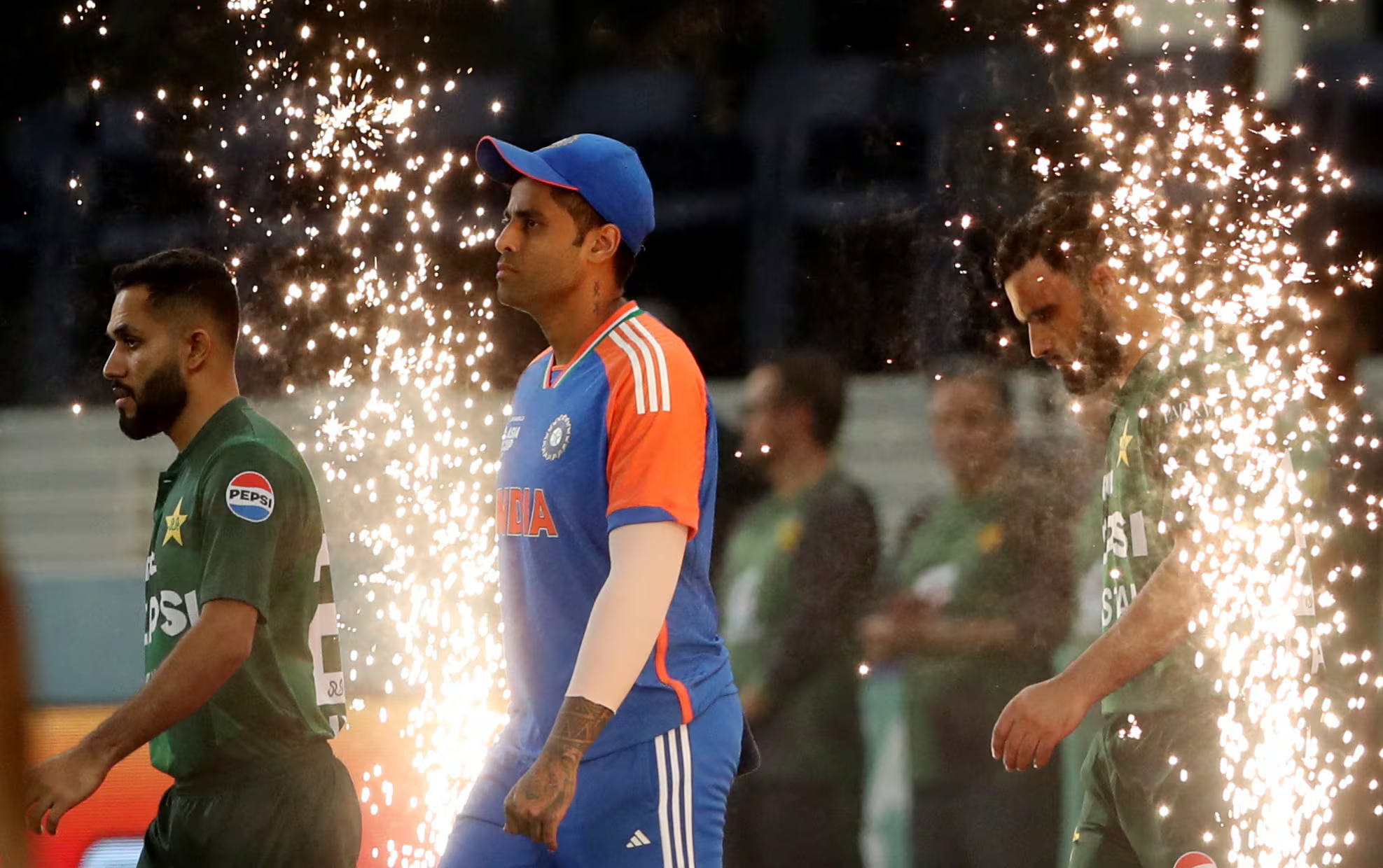
India’s dramatic victory over Pakistan in the 2025 Asia Cup final was not only a thrilling cricketing spectacle but also surrounded by a unique controversy. Despite clinching their ninth Asia Cup title, the Indian cricket team did not receive the traditional post-match trophy. This unusual situation quickly became the focus of fans, analysts, and cricket officials alike, sparking widespread debate across social media and sports platforms.
The Trophy Controversy
India defeated Pakistan by five wickets in Dubai in a tense encounter that kept millions of fans on the edge of their seats. After the final, the customary trophy presentation was disrupted under unusual circumstances. Indian players opted not to accept the winner’s trophy from Pakistan’s Interior Minister and Asian Cricket Council (ACC) President, Mohsin Naqvi. The decision was driven by ongoing diplomatic tensions between the two nations.
As a result, the physical trophy was never handed to the players. Instead, the team celebrated their hard-fought victory without holding the iconic symbol of triumph. Fans, commentators, and journalists expressed surprise at the scenario, which was unprecedented in Asia Cup history. Some media outlets described the scene as “chaotic yet celebratory,” highlighting the strange juxtaposition of victory and diplomacy.
Sanju Samson’s Response
Sanju Samson, who played a crucial role in India’s final victory, recently spoke about the incident. Addressing the media at the CEAT Cricket Rating Awards in Mumbai, Samson offered his perspective with humor and insight.
He stated, “Even if we don’t have anything, we have to celebrate like we have everything in our hands. So that’s what we did.” Samson acknowledged that the situation was unusual and “a bit strange,” yet he emphasized the team’s ability to maintain a positive and celebratory atmosphere.
He highlighted that, despite the absence of the physical trophy, the players stayed united and focused on the joy of victory. His remarks underscore a broader sentiment within the team: the emphasis on shared experiences and camaraderie over material recognition.
Team’s Unified Celebration
Although the trophy was missing, India’s players displayed creativity in celebrating their win. Captain Suryakumar Yadav led a symbolic tribute by mimicking the slow walk of former captain Rohit Sharma during the 2024 T20 World Cup victory.
The gesture quickly went viral on social media. Fans shared videos, photos, and memes applauding the team’s lighthearted yet meaningful approach. Analysts noted that this celebration demonstrated not only resilience but also team unity. It reinforced the idea that the true essence of victory lies in shared experiences, teamwork, and collective joy, rather than holding a physical trophy.
Former players and commentators praised the team for staying composed in an unusual situation. Many highlighted that the team’s professionalism and ability to focus on the spirit of the game set an example for future generations.
Ongoing Developments
Currently, there is no official update regarding when India will receive the Asia Cup trophy or winner’s medals. The ACC has not announced a formal plan for handing over the award.
Reports suggest that ACC President Mohsin Naqvi stated India could collect the trophy directly from the ACC office if they “truly” wished to do so. This ongoing diplomatic impasse has raised questions about how sports and politics intersect, particularly between India and Pakistan.
Cricket analysts argue that this situation reflects the broader geopolitical challenges in South Asia. While the tournament is a sporting event, underlying diplomatic tensions influenced a fundamental aspect of the post-match ceremony.
Broader Reactions
The trophy controversy has sparked debates across multiple platforms. Fans expressed disappointment that India’s players were denied the tangible symbol of their hard-earned victory. Some commentators criticized the politicization of sports, suggesting that sporting achievements should remain separate from international relations.
On the other hand, many fans and analysts praised the Indian team for maintaining focus on the spirit of the game. Social media trends reflected admiration for the squad’s professionalism, resilience, and unity. Analysts noted that the players’ ability to celebrate collectively, despite the unusual circumstances, sent a positive message to fans around the world.
Former players also weighed in, highlighting that true victory lies in teamwork, skill, and perseverance rather than in trophies or medals. They commended the Indian squad for putting their cricketing ethos above external controversies.
Historical Context
This is not the first time cricket has intersected with politics in South Asia. Matches between India and Pakistan have historically been laden with diplomatic undertones. Trophy ceremonies, player interactions, and even scheduling have occasionally been influenced by broader geopolitical realities.
The 2025 Asia Cup trophy controversy adds another chapter to this complex history. Experts suggest that the situation highlights the importance of sports diplomacy. While political tensions exist, cricket continues to provide a platform for engagement, dialogue, and mutual respect between the two nations.
Conclusion
The events following India’s 2025 Asia Cup victory illustrate the complex relationship between sports, politics, and national pride. While the absence of the trophy was highly unusual, the Indian cricket team demonstrated resilience, maturity, and professionalism throughout the incident.
Sanju Samson’s remarks reflect the mindset of the team: true success is measured not by trophies or medals but by unity, determination, and team spirit. The controversy, rather than overshadowing the victory, ultimately showcased the Indian squad’s character and collective strength.
As fans eagerly await clarity regarding the trophy, the 2025 Asia Cup final will be remembered for both India’s thrilling on-field performance and the team’s exemplary handling of an unexpected off-field challenge. The incident serves as a reminder that in cricket, as in life, unity and perseverance are often the most important trophies of all.