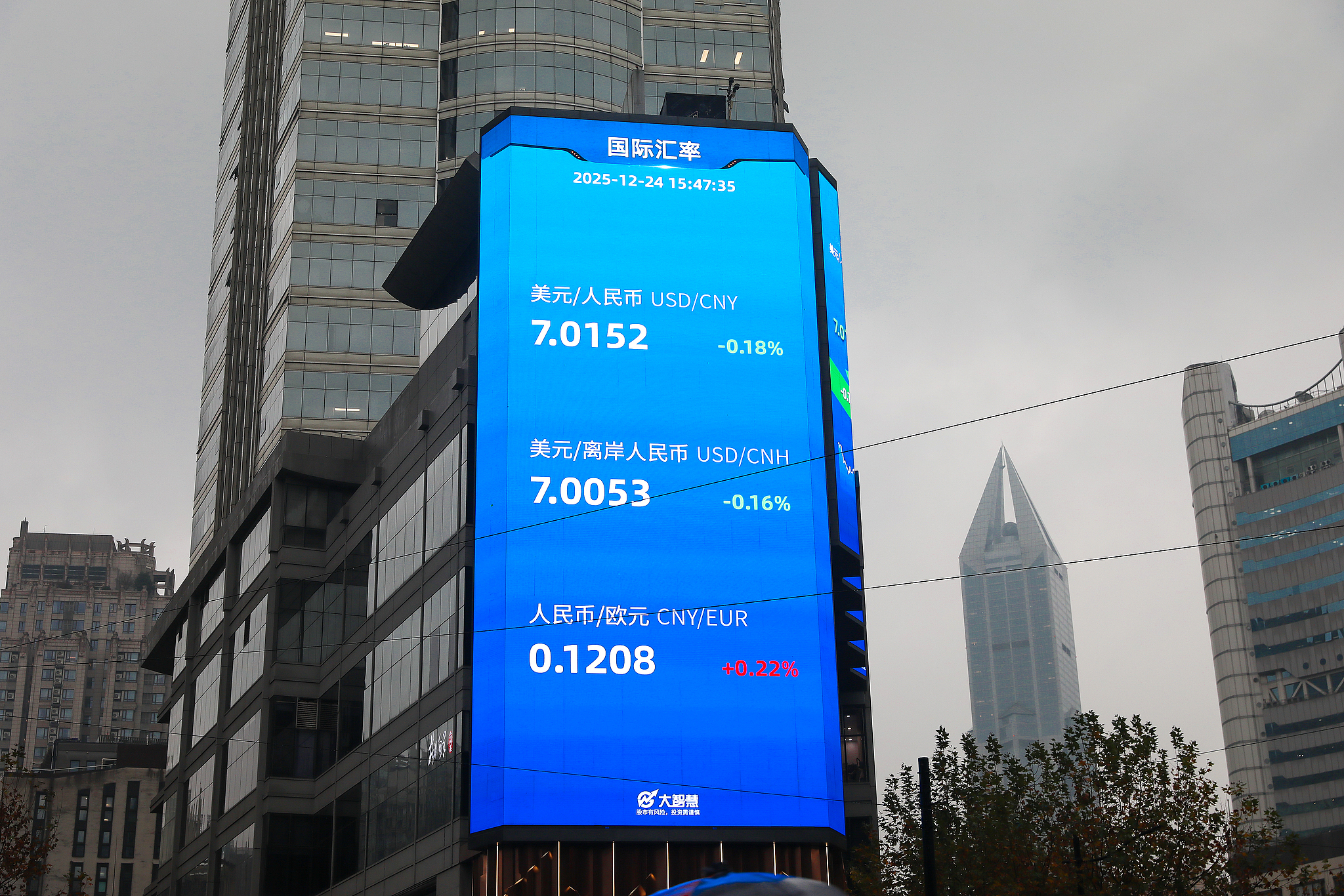
RMB Poised for further gains after April this year, when the exchange rate against the US dollar reversed its prolonged depreciation trend and recently broke through the key 7 RMB to 1 USD level. This shift reflects more than short-term market sentiment. Instead, it signals strengthening macroeconomic fundamentals, improved external conditions, and structural factors that are expected to remain in place through 2026.
The combination of a rapidly expanding current account surplus, easing trade tensions, undervalued purchasing power, and growing expectations of US dollar weakness has reshaped market expectations. As these forces intensify next year, RMB Poised becomes a realistic description of the currency’s medium-term trajectory rather than a speculative outlook.
While policymakers continue to prioritize stability, the direction now points toward moderate and sustained appreciation. Rather than sharp swings, the dominant theme for 2026 is likely to be controlled strengthening aligned with China’s broader economic rebalancing goals.
Expanding current account reinforces why RMB Poised
One of the strongest supports for RMB Poised lies in China’s expanding current account surplus. By November 2025, customs data showed that China’s goods trade surplus exceeded one trillion dollars for the first time. At the same time, the service trade deficit narrowed in the first half of the year, suggesting the current account surplus could reach a record high for 2025.
Historically, a rising current account surplus increases demand for the domestic currency and strengthens the long-term sustainability of the balance of payments. Higher export revenues translate into steady foreign exchange inflows, which provide structural backing for the RMB. Moreover, forecasts of stable global growth in 2026 are expected to support external demand for Chinese goods.
As trade and current account surpluses continue to expand, the external fundamentals supporting RMB Poised are likely to strengthen further next year.
Trade resilience and easing frictions support confidence
Despite intensified trade friction between China and the United States in 2025, China’s exports proved resilient. Although shipments to the US declined sharply, demand from economies outside the US played a decisive role in stabilizing overall exports, employment, and industrial activity. This performance highlighted the competitiveness and adaptability of China’s supply chain.
Global investors interpreted this resilience as a sign of structural strength, reinforcing confidence in Chinese assets and supporting the currency. In addition, several rounds of high-level trade negotiations this year have reduced uncertainty. Expectations of improved bilateral engagement in 2026 suggest that China’s external environment could be more favorable than in 2025.
As trade relations stabilize, RMB Poised remains supported by a more predictable external backdrop and sustained export capacity.
Purchasing power undervaluation strengthens RMB Poised case
Another key reason RMB Poised for appreciation in 2026 is the growing divergence in price levels between China and the United States. From 2022 to 2024, US inflation remained elevated, while price pressures in China stayed subdued. This widening inflation gap has left the RMB’s real effective exchange rate at relatively low levels.
Such misalignment suggests that the RMB’s purchasing power is undervalued. The recent rebound against the US dollar may mark the early stages of a correction. As relative price levels adjust, nominal appreciation would help align exchange rates more closely with economic fundamentals.
If this correction continues, it will further reinforce why RMB Poised remains a credible outlook through 2026.
Read Also
China’s flying taxi market takes off
Chaebol marriages reshape South Korea business
US dollar weakness adds momentum to RMB Poised
External currency dynamics also favor RMB Poised. Signs of cooling in the US labor market, combined with concerns over stretched equity valuations, have weakened confidence in the dollar. The Federal Reserve has already cut interest rates multiple times since September, and markets broadly expect further easing in 2026.
Lower interest rates reduce the appeal of dollar-denominated assets and place downward pressure on the US dollar. In addition, growing concerns about fiscal sustainability and central bank independence have raised questions about long-term dollar credibility. Rising gold and commodity prices may reflect these market anxieties.
As the dollar weakens, the relative position of the RMB improves, adding further support to its appreciation outlook.
Policy balance and economic implications
A sustained RMB Poised scenario carries important implications for China’s economy. Moderate appreciation can help offset rising global commodity prices, easing imported cost pressures. It also increases the international purchasing power of Chinese households, potentially supporting outbound travel and consumption in 2026.
However, policymakers remain mindful of export competitiveness, especially given uncertainty surrounding domestic demand recovery. For this reason, authorities are unlikely to allow excessive appreciation. Instead, a gradual and controlled rise aligns better with macroeconomic stability objectives.
Overall, while the RMB may not surge dramatically, a steady appreciation toward around 6.8 against the US dollar represents a plausible central path for 2026.