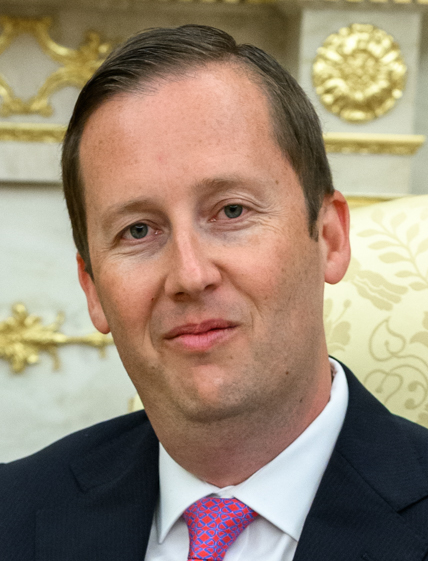
The U.S. Senate has confirmed Sergio Gor as the next Ambassador to India and Dr. S. Paul Kapur as Assistant Secretary of State for South and Central Asian Affairs. The vote took place on October 7, 2025, as part of a larger en bloc vote. Fifty-one senators approved the nominations, while 47 opposed, amid a partial government shutdown. These appointments reflect the Trump administration’s focus on reinforcing diplomatic engagement in South and Central Asia.
Sergio Gor: A Trusted Trump Aide in New Delhi
Background and Career
Sergio Gor, born Sergey Gorokhovsky in Tashkent, Uzbekistan, in 1986, has long been a trusted ally of President Donald Trump. He has played a key role in shaping political strategy and managing administrative operations within the White House.
Before his ambassadorial nomination, Gor served as Director of the White House Presidential Personnel Office. This role placed him at the center of the administration’s staffing and policy decisions. He also led the pro-Trump political action committee “Right for America,” helping to amplify Trump’s policy and campaign goals.
In August 2025, President Trump nominated Gor to serve as U.S. Ambassador to India and Special Envoy for South and Central Asian Affairs. This dual role underscores India’s importance in U.S. foreign policy and the need for consistent leadership in the region.
Diplomatic Challenges and Opportunities
Gor steps into his ambassadorial role amid tensions between the U.S. and India. Trade disputes have escalated after the Trump administration imposed a 50% tariff on certain Indian goods. This decision followed India’s increased imports of Russian oil. Additionally, failed trade negotiations and India’s growing alignment with the BRICS bloc have added complexity to the diplomatic environment.
As Ambassador, Gor is expected to address these economic disputes while promoting strategic cooperation in areas such as defense, technology, and energy. He will also facilitate dialogue on regional security, counterterrorism, and broader U.S.-India partnerships. Gor faces the challenge of balancing diplomatic tact with advancing U.S. strategic priorities.
Dr. S. Paul Kapur: Academic Expertise Meets Diplomacy
Academic and Professional Background
Dr. S. Paul Kapur, an Indian-American scholar, has been confirmed as Assistant Secretary of State for South and Central Asian Affairs. He holds a Ph.D. from the University of Chicago and has extensive experience in international relations, focusing on security, defense, and South Asian studies.
Prior to his confirmation, Kapur worked at the Hoover Institution, conducting research on South Asian security issues. His work covered nuclear proliferation, military strategy, and regional stability. Kapur’s academic contributions have earned recognition in both scholarly and policy-making circles.
His combination of academic insight and policy experience makes him well-positioned to oversee U.S. diplomatic efforts in South and Central Asia. He brings analytical rigor and practical knowledge to the State Department’s approach in the region.
Policy Focus and Strategic Goals
In his new role, Kapur is expected to focus on several key areas:
- Strengthening Bilateral Relations: Enhancing diplomatic, economic, and security ties with countries in South and Central Asia, especially India.
- Regional Stability: Addressing conflicts, nuclear threats, and terrorism through multilateral efforts.
- Economic Cooperation: Supporting trade and investment initiatives that benefit both the U.S. and partner nations.
- Human Rights and Governance: Advocating democratic values, transparency, and effective governance to support regional stability.
Kapur’s appointment signals an emphasis on research-driven, strategic policymaking in the region. His expertise complements Gor’s political and diplomatic experience.
Implications for U.S.-India Relations
The appointments of Gor and Kapur carry significant implications for U.S.-India relations. They mark a renewed focus on engagement and policy coherence.
- Trade and Economic Engagement: Gor’s negotiation skills will be key in addressing trade disputes and fostering economic cooperation. His discussions with Indian policymakers could result in new frameworks for fair trade, joint technological initiatives, and energy collaboration.
- Security and Strategic Cooperation: Kapur’s security expertise will support defense partnerships, intelligence sharing, and counterterrorism measures. This is critical given regional security challenges and evolving threats in South and Central Asia.
- Cultural and People-to-People Ties: Both officials are expected to support educational and cultural exchanges between the U.S. and India. Such initiatives strengthen mutual understanding and soft power influence.
Together, Gor and Kapur aim to create a balanced, strategic approach that combines diplomacy, policy analysis, and practical governance. Their work is likely to enhance cooperation and strengthen long-term U.S.-India ties.
Regional and Global Significance
South and Central Asia are increasingly central to global geopolitics. China’s growing influence, regional security threats, and emerging trade networks make this region a strategic priority for the U.S.
By appointing Gor and Kapur to leadership positions, the U.S. intends to reinforce influence and maintain strategic partnerships. Analysts also view these appointments as a signal of Washington’s commitment to deeper engagement with India in defense, technology, and energy.
Their efforts could have wider regional impacts, affecting relations with Pakistan, Afghanistan, and Central Asian states. Effective diplomacy in this area is seen as crucial for U.S. interests in maintaining regional stability and countering rival powers.
Conclusion
The Senate confirmations of Sergio Gor and Dr. S. Paul Kapur mark a pivotal moment in U.S. foreign policy. Gor brings political and administrative expertise, while Kapur offers scholarly insight and policy acumen. Together, they are expected to strengthen ties with India and other regional partners.
As they begin their respective roles, both officials will face challenges ranging from trade disputes to regional security issues. Their performance could shape the trajectory of U.S.-India relations and broader regional cooperation.
The international community will be closely observing their efforts. Success will depend on navigating economic, diplomatic, and security challenges while fostering mutual trust and strategic collaboration. Their tenure could define the future of U.S. engagement in one of the world’s most dynamic and strategically important regions.