Vietnam’s economy posted a robust 8.22 percent year-on-year growth in the third quarter of 2025—its fastest quarterly pace since 2011 (excluding the 2022 post-pandemic rebound). The quarterly result exceeded the 7.96 percent rate recorded in Q2. This performance surprised many analysts, especially in light of newly imposed 20 percent tariffs by the U.S. on Vietnamese goods.
Trade has remained a crucial driver. In the first nine months of 2025, Vietnam achieved a trade surplus of $16.8 billion and a total trade volume exceeding $680 billion, up 17 percent over the same period in 2024. Despite tariff pressure, exports rose in Q3, and foreign direct investment flows remained healthy.
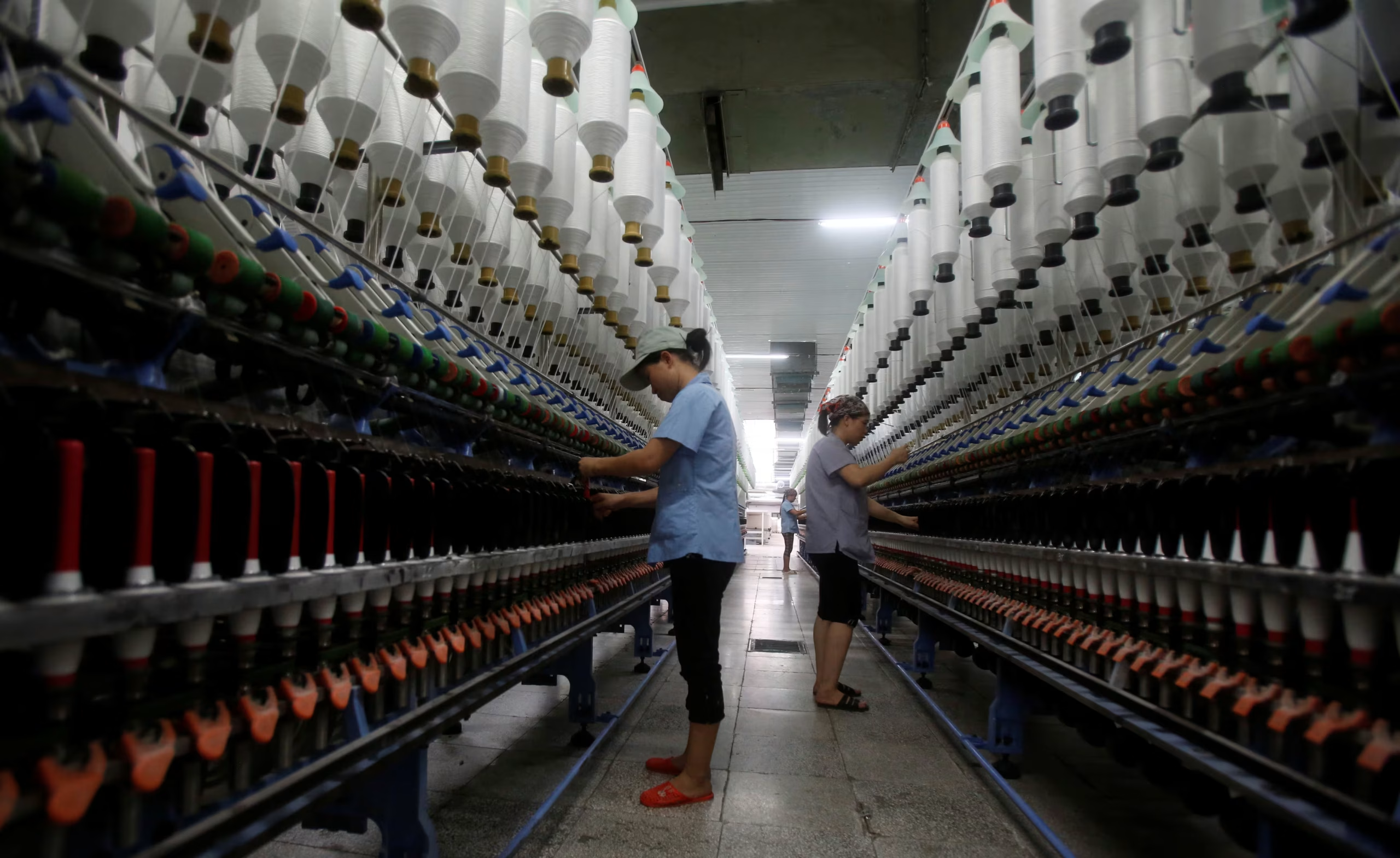
However, the tariff impacts are showing early signs of strain. In September, total exports eased, slipping 1.7 percent compared with August. Shipments to the U.S.—Vietnam’s largest export market—fell 1.4 percent month-on-month. Sectors most affected include footwear (a 27 percent decline) and textiles and garments (20 percent decline), though rising exports of electronics, chemicals, and coffee offered partial offset.
Vietnam’s government remains confident. It is targeting full-year GDP growth between 8.3 and 8.5 percent—above the forecasts of the World Bank (6.6 percent) and IMF (6.5 percent). But such ambitious goals carry risks. Downside pressures include external demand softness, mounting climate events, and slow pace of structural reforms.
Inflation also warrants attention. Over the first nine months, inflation climbed 3.27 percent year-on-year, with September posting 3.38 percent. These levels are moderate but may narrow room for further monetary easing if cost pressures intensify.
The sources of growth in Q3 were multifold. Export sectors, despite tariffs, delivered solid performance overall. Foreign direct investment (FDI) inflows continued to support industrial expansion, especially in electronics and high-tech manufacturing. Strong demand in Asian and European markets helped sustain momentum.
The trade surplus is an important buffer. Vietnam’s export-import balance has allowed some insulation from global headwinds. Continued trade diversification—targeting non-U.S. markets—could help mitigate exposure to any further U.S. tariff escalation.
On the challenge side, the tariff shock has shown how sensitive certain sectors remain. Footwear and textiles are heavily dependent on U.S. demand; downside volatility in those industries could stain overall growth. The government is actively seeking trade negotiations with the U.S. to ease tariff burdens, and ongoing diplomatic engagement is expected.
Climate and natural disasters pose increasing drag. In Q3, damage from Typhoon Bualoi was assessed at over $625 million. Such events destroy infrastructure, disrupt supply chains and displace production. Continued exposure to climate risk demands stronger resilience planning and adaptation measures.
To maintain momentum, Vietnam needs to deepen reforms: improving governance, boosting productivity, and enhancing education and training. The country must also upgrade infrastructure and logistics to support manufacturing competitiveness. Monetary policy will need calibration—too loose policy could stoke inflation, while too tight policy may choke demand.
Looking ahead to 2026, the external environment remains uncertain. Global demand could slow further, and trade tensions might escalate. Yet if Vietnam can maintain strong investment inflows, diversify export markets, and manage macro stability, it may hold onto respectable growth even under adversity.