Dulhasti Stage II reflects rising India–Pakistan tensions as water infrastructure becomes a strategic lever amid growing strain on the Indus Waters Treaty.
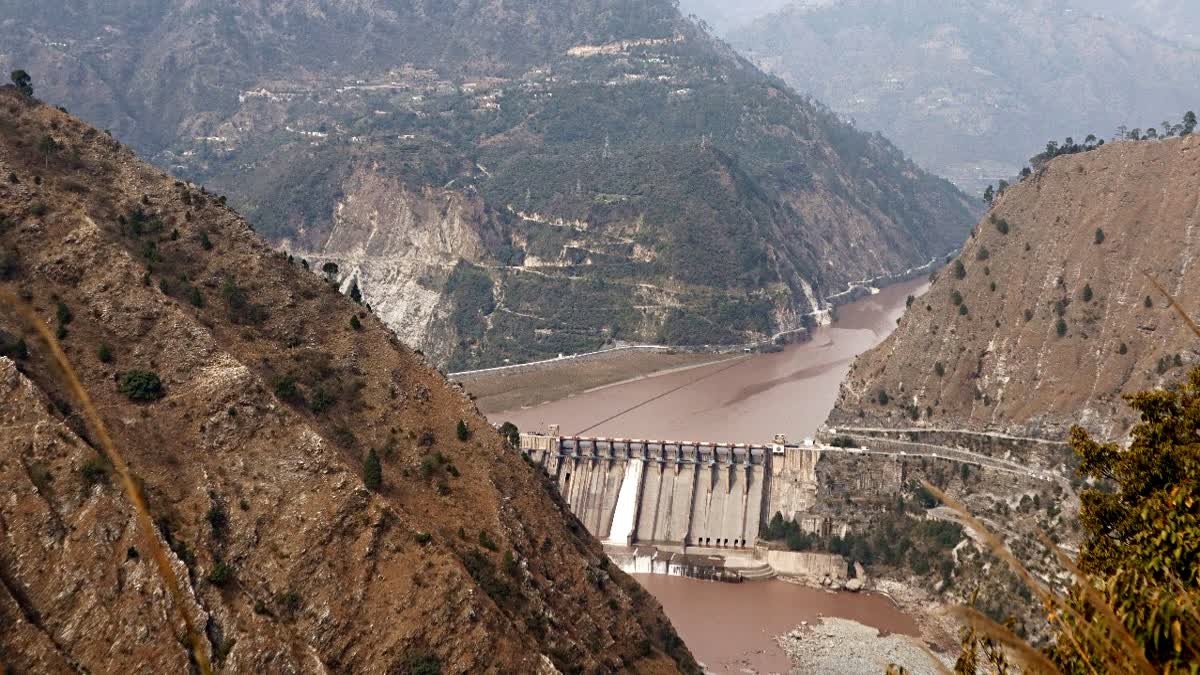
Dulhasti Stage II has emerged as a powerful symbol of changing water politics in South Asia, marking a moment where infrastructure development intersects directly with geopolitics. India’s approval of the 260-megawatt hydropower project on the Chenab River comes at a time of heightened regional tension and growing uncertainty over the future of the Indus Waters Treaty, long considered one of the world’s most resilient water-sharing agreements.
The decision follows India’s April 2025 move to place the Indus Waters Treaty in abeyance, a step that reshaped how water governance is perceived between India and Pakistan. While officially framed as a run-of-the-river project, Dulhasti Stage II is unfolding within a broader strategic context in which upstream control is increasingly viewed as a source of leverage rather than shared responsibility.
Developed by NHPC Limited at an estimated cost of $395 million, Dulhasti Stage II will build on infrastructure from the existing 390 MW Dulhasti Stage I plant commissioned in 2007. Indian authorities argue that the project remains compliant with treaty provisions. However, compliance debates are no longer limited to technical design alone, as cumulative impact, timing of flows, and parallel policy decisions now shape the broader picture.
The Indus Waters Treaty, signed in 1960 under World Bank mediation, allocated the eastern rivers to India and the western rivers, including the Chenab, to Pakistan with strict limits on Indian usage. Crucially, the treaty does not allow unilateral suspension. Despite this, India has slowed data sharing, questioned dispute-resolution mechanisms, and accelerated several hydropower projects across the basin, including Ratle, Pakal Dul, and Bursar.
For Pakistan, the Chenab River is central to agricultural productivity and food security. The river feeds irrigation systems supporting wheat, rice, and sugarcane across Punjab. With more than 80 percent of Pakistan’s agriculture dependent on Indus Basin flows, even modest disruptions in timing can create outsized economic and social consequences.
Dulhasti Stage II also draws water from the Marusudar River through upstream linkages with the Pakal Dul project. Indian environmental documents acknowledge that this will alter river morphology and ecology, affecting a stretch of river that ultimately feeds into Pakistan. While run-of-the-river projects do not allow large storage, they still permit regulation of flow timing, a factor that can influence sowing and harvesting cycles downstream.
The growing use of water infrastructure as a strategic tool has drawn international attention. Analysts increasingly warn that water coercion operates quietly but persistently, affecting rural livelihoods, food prices, and economic stability without triggering immediate crises. In nuclear-armed South Asia, this introduces a new layer of risk that is harder to deter or de-escalate than traditional military tensions.
Beyond bilateral implications, the erosion of the Indus Waters Treaty carries global significance. The agreement has long been cited as proof that transboundary water cooperation can endure even during conflict. Weakening it risks setting a precedent where international water treaties become politically conditional, at a time when climate change and population growth are intensifying competition for freshwater worldwide.
Dulhasti Stage II therefore represents more than an energy project. It is a test of whether the Indus Waters Treaty remains a living framework or fades into symbolic relevance. Without restored data sharing and credible dispute resolution, mistrust is likely to deepen, reinforcing water as a long-term pressure point in India–Pakistan relations.
In the short term, upstream control may appear to offer strategic advantage. Over time, however, transforming shared rivers into instruments of leverage risks undermining regional stability, food security, and one of the few enduring pillars of cooperation in South Asia.