On October 10, 2025, President Donald Trump declared a sharp escalation in U.S.–China trade tensions, announcing plans to impose a 100 % tariff on Chinese imports starting November 1 (or sooner), along with potential new export controls on critical U.S. software.
Trump framed the move as retaliation for China’s newly issued restrictions on rare-earth mineral exports, which he said threaten U.S. technological leadership and national security.
He also cast doubt on a planned meeting with Chinese President Xi Jinping at the upcoming APEC summit, warning publicly there now “seems to be no reason” for the meeting amid the escalating standoff.
Markets reacted swiftly: the S&P 500 fell about 2.7 % in its worst day since April, reflecting investor concerns about a new wave of trade disruptions.
Why Trump Is Escalating
China’s Rare-Earth Move
Beijing recently imposed stricter controls on exports of rare-earth elements, essential for high-end electronics, defense systems, and advanced manufacturing. Under the new rules, foreign firms must obtain special approvals, and applications relating to military uses will likely be blocked.
China dominates processing and refining of these minerals globally, so its restrictions pose significant leverage.
The Trump administration views these measures as an attempt to throttle U.S. industries, force dependence on Chinese suppliers, and gain bargaining power in the tech race.
Retributive Strategy
Trump’s announcement reflects a classic tit-for-tat escalation: China imposes controls → U.S. threatens tariffs and export curbs. By threatening to match or exceed China’s restrictions, Trump aims to pressure Beijing back toward concession.
Though the White House has not fully spelled out every measure yet, the export curbs he mentioned would likely target all “critical software” — a broad category affecting cloud infrastructure, AI, encryption, data tools, and more.
Trump also said the timing is strategic: by pegging it to November 1, he leaves space to adjust based on China’s further actions.
What Will Be Affected — and Who
Chinese Exports
All goods shipped from China to the U.S. could face an additional 100 % tariff atop existing levies.
That includes electronics, consumer goods, industrial components, machinery — anything not exempted.
U.S. Export Controls
Trump’s threatened export restrictions on critical software are meant to counter China’s rare-earth move and curb China’s access to the U.S. tech stack.
Some reports suggest more export curbs could follow on drones, aerospace parts, or components used in military systems.
Global Supply Chains
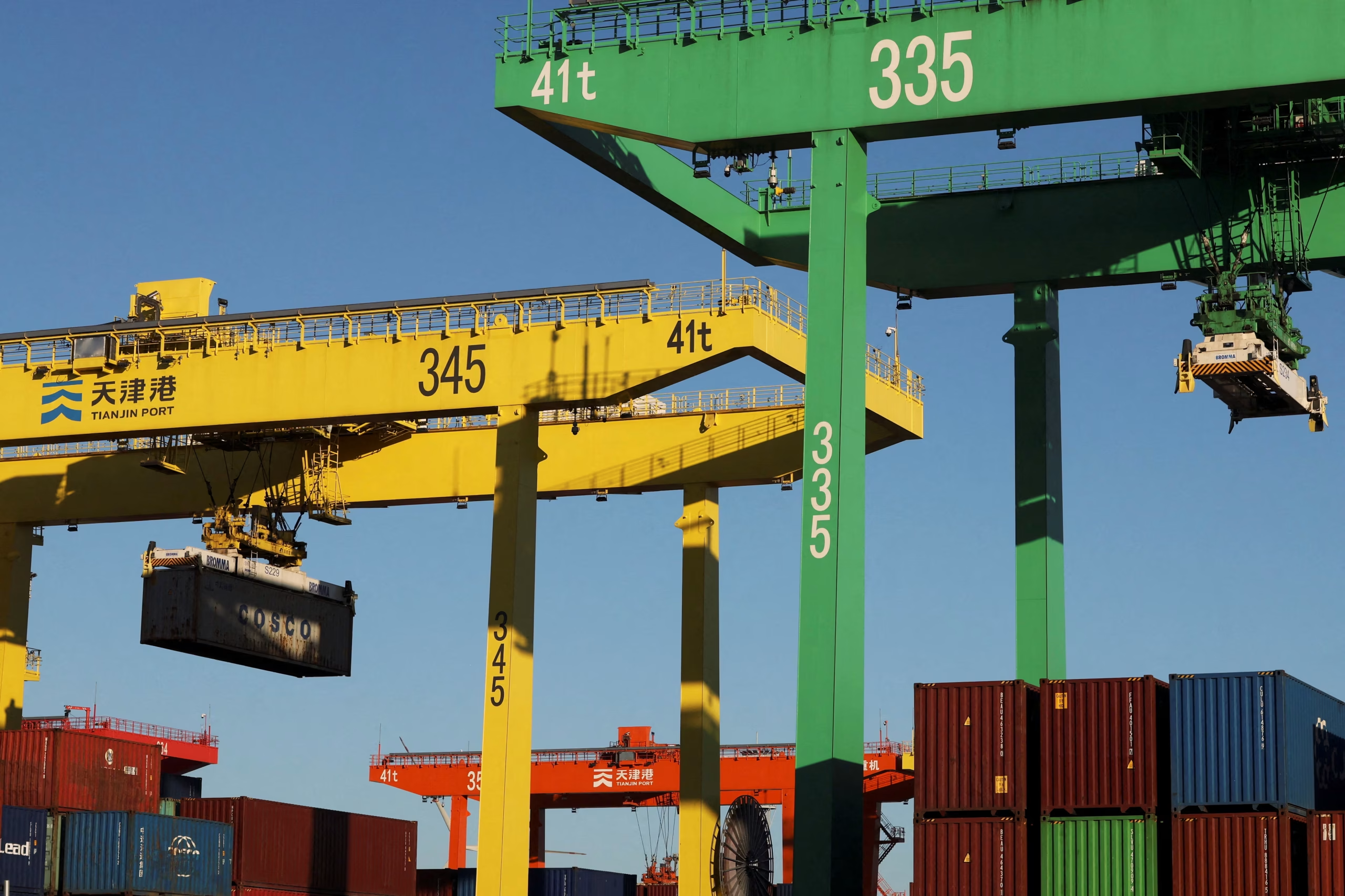
Because China is deeply integrated into global supply chains — especially in semiconductors, EVs, solar, electronics — tariffs of this magnitude risk major ripple effects. Components, subassemblies, and final goods may all become more expensive or harder to source.
Market & Investor Response
The announcement rattled financial markets. Concern over disrupted trade flows, higher costs, and inflation spooked investors. Safe-haven assets like U.S. treasuries and gold saw inflows, while equities fell.
Tech stocks, especially those dependent on rare-earth supply or Chinese manufacturing, could be especially vulnerable.
Risks & Potential Blowbacks
Escalation Spiral
With both sides threatening economic weapons, the possibility of a full-blown trade war is high. If each escalates with more tariffs or export bans, global trade and growth could suffer.
Domestic Impact
Such steep tariffs risk inflation for U.S. consumers and increased cost pressure for American manufacturers relying on Chinese inputs. Some sectors could lobby hard against implementation.
Legal & WTO Challenges
China may contest the U.S. tariffs in the World Trade Organization (WTO), citing violations of trade rules. While the U.S. may argue national security or retaliation, legal processes could drag on.
Supply Chain Disruption
Businesses with lean inventory or “just-in-time” models may face shortages or delays. Alternative suppliers in Southeast Asia, India, or Latin America may absorb some demand — but capacity constraints could limit that shift.
Meeting Fallout
The threatened Xi meeting could be canceled or downgraded, reducing diplomatic windows for de-escalation. That could prolong confrontation.
Possible Scenarios & Outcomes
De-Escalation & Negotiation
Trump’s tariff and export threats may be a bargaining tactic: if China reverses or softens its rare-earth controls, the U.S. could moderate its response. A compromise might emerge before November.
Selective Application
In practice, some sectors might be exempted or phased to avoid harming crucial U.S. industries. The export controls might target specific software rather than blanket bans.
Strategic Diversification
U.S. and global firms may accelerate efforts to reduce dependency on Chinese supply, invest in rare-earth mining outside China, or stockpile critical materials preemptively.
Global Fragmentation
If the U.S.–China standoff deepens, global trade blocs may realign. Countries may choose sides or seek to create alternative supply chains and trade pacts.
Conclusion
Trump’s threats of a 100% tariff on Chinese imports and new export controls represent a dramatic escalation in the ongoing trade rivalry between the world’s two biggest economies. In his framing, China’s recent rare-earth mineral restrictions justify a forceful response to defend U.S. industrial and technological leadership.
If implemented, the move would profoundly affect global supply chains, tech production, trade flows, and diplomacy. Markets have already reacted with anxiety. The question now is whether China backs down, responds in kind, or attempts a middle path to defuse tensions.
Whatever happens, the upcoming weeks will test the resilience of trade institutions, the strategic agility of corporations, and the capacity of diplomacy to prevent a damaging spiral.