Japan and the United States deepen military cooperation with joint missile production, supply chain coordination and expanded operations near Okinawa.
Japan and the United States have agreed to significantly expand joint defense cooperation, with a renewed focus on missile production and increased military activity in waters southwest of Japan’s main islands. The move reflects growing regional security concerns and a shared commitment to strengthening deterrence and operational readiness in the Indo-Pacific.
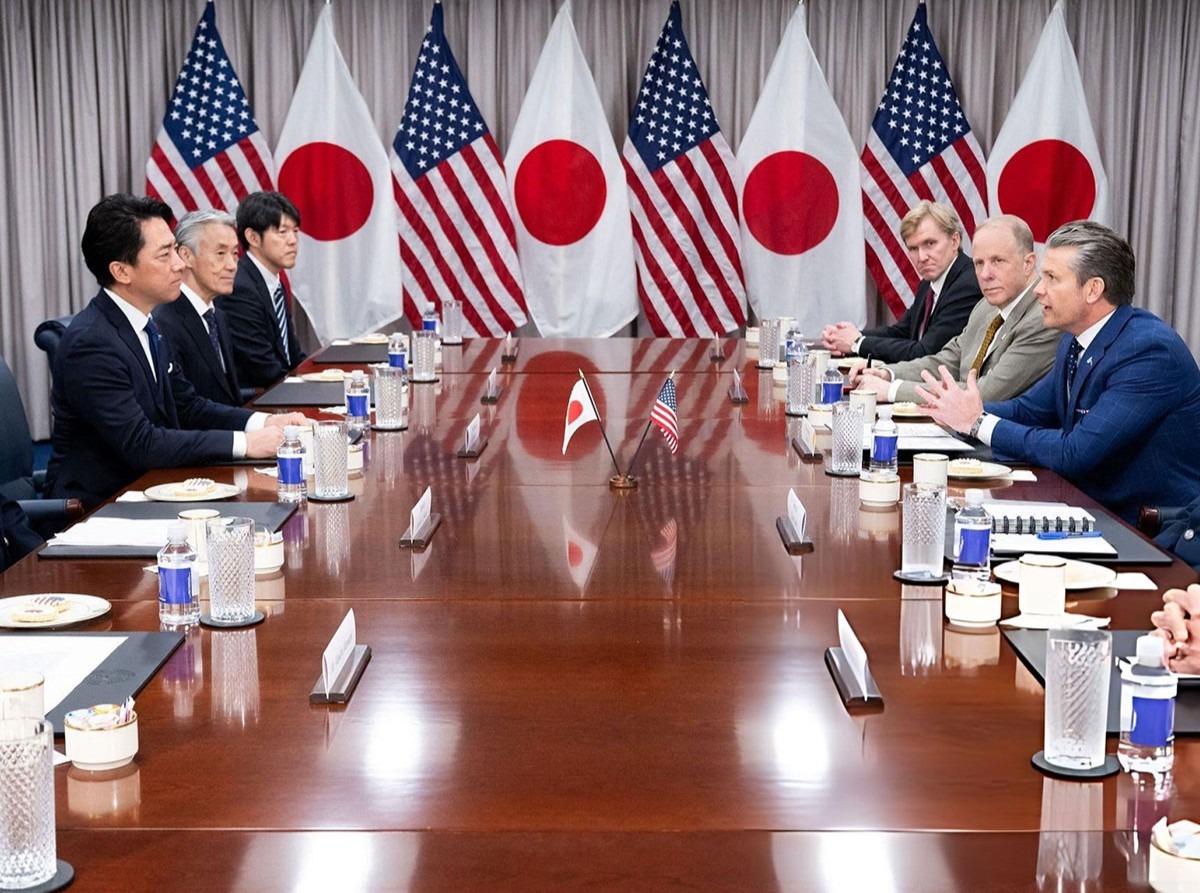
The agreement was reached during talks in Washington between Shinjiro Koizumi and Pete Hegseth. Following the meeting, both governments confirmed plans to enhance co-production of key defense equipment while deepening coordination across military operations and logistics.
According to Japan’s Ministry of Defence, the two allies will continue developing joint production of air-to-air and ground-to-air interceptor missiles. These efforts are aimed at improving interoperability between Japanese and U.S. forces while ensuring a stable and resilient supply of advanced defense systems amid rising geopolitical tensions.
Beyond weapons manufacturing, Japan and the United States also agreed to expand joint military exercises across multiple locations. Particular emphasis will be placed on the southwestern region of Japan, an area that includes Okinawa and surrounding waters. This region is strategically vital, hosting the majority of U.S. military bases in the country and serving as a key forward-operating area for regional security missions.
Supply chain security formed another central pillar of the discussions. Both sides pledged to strengthen cooperation in defense-related supply chains, including access to critical minerals essential for modern weapons systems and advanced technologies. Officials noted that resilient supply chains are increasingly important as global competition intensifies and disruptions become more frequent.
For Tokyo, reinforcing defense capabilities in the southwest is a long-standing priority. The region’s proximity to major shipping lanes and potential flashpoints makes it central to Japan’s national security planning. Expanded U.S. presence and joint activities are expected to enhance surveillance, rapid response, and collective deterrence.
The agreement underscores the evolving nature of the Japan–U.S. alliance, which continues to adapt to new security challenges. By combining industrial cooperation with expanded military coordination, both countries aim to ensure long-term stability while maintaining a credible defense posture in a rapidly changing regional environment.